Pigjaw Scaffold–Bone Interface Mechanical Testing

Pigjaw Scaffold–Bone Interface Mechanical Testing

This project focuses on developing and validating a mechanical testing methodology to characterize the interfacial behavior between a biodegradable polymer scaffold and porcine jawbone. Motivated by discrepancies observed in prior in vivo studies, the work integrates custom fixture design, finite element modeling, and Instron push-testing to extract effective stress–strain behavior at the scaffold–bone interface.

The project emphasizes repeatable experimental design, realistic contact modeling, and correlation between simulation and physical testing, with the long-term goal of informing scaffold design and improving interpretation of biological integration studies.
Documentation
View documentation
Group
Tissue and Biomechanics Laboratory
Role
Mechanical Design, Finite Element Modeling, Experimental Testing
Skills
Abaqus FEA, Experimental Mechanics, Fixture Design, Contact Modeling, CAD, Instron Testing
Year
2025

Process

The project began with a review of prior scaffold–bone integration studies to identify limitations in existing mechanical characterization approaches. A push-test configuration was selected to directly probe interfacial load transfer while minimizing geometric ambiguity.

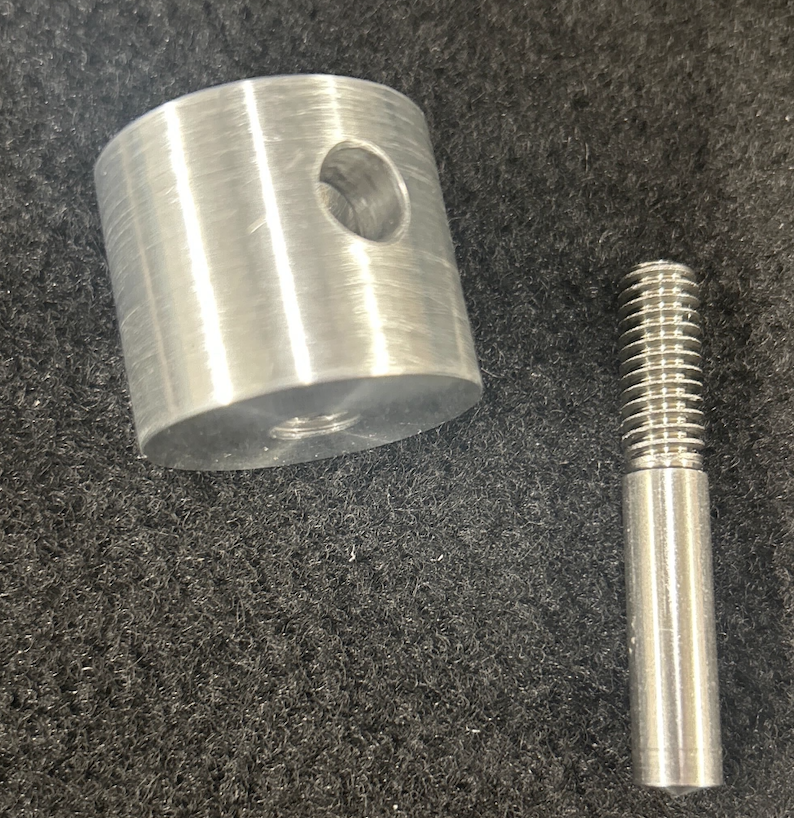
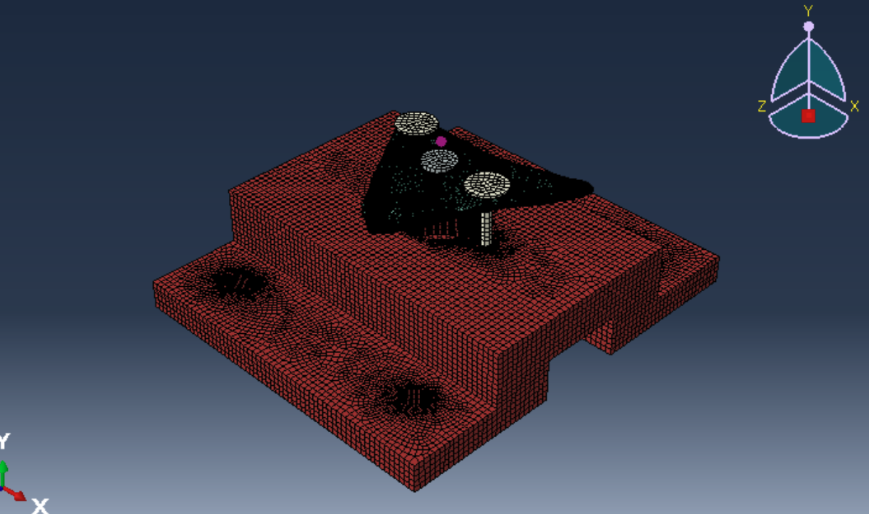
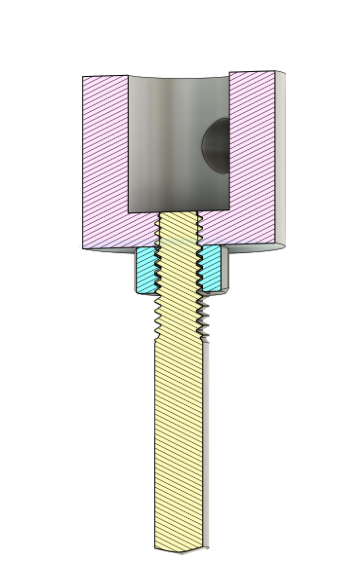
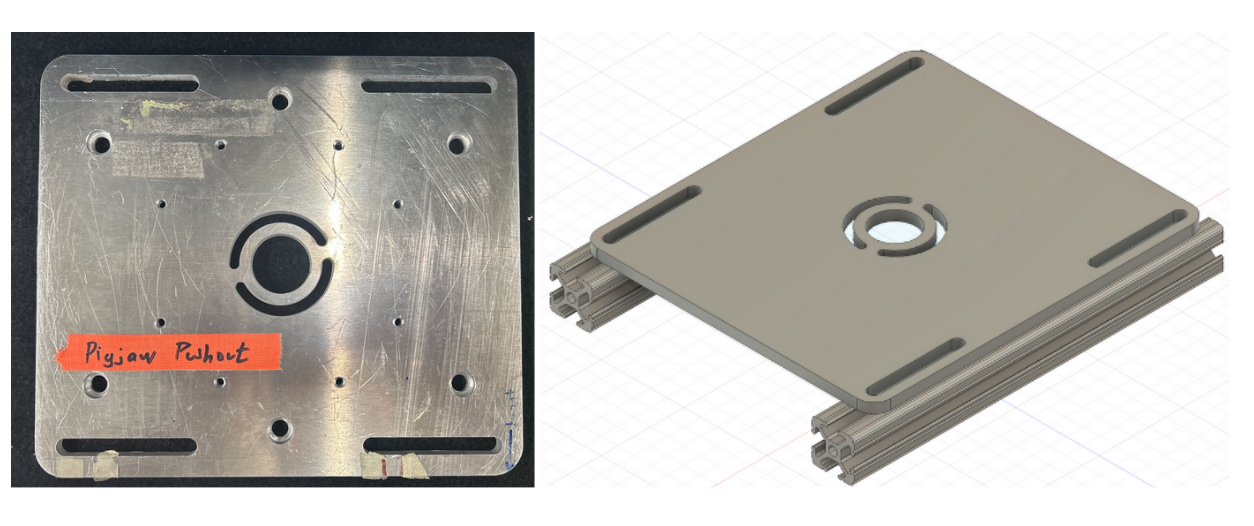
A modular aluminum fixture was designed and iterated to stabilize irregular jaw geometry under axial loading. Parallel to fixture development, finite element models were constructed in Abaqus to simulate the push-test, incorporating orthotropic bone properties, isotropic polymer behavior, and cohesive zone modeling at the scaffold–bone interface.

Multiple contact and damage parameter sets were evaluated to assess sensitivity and guide experimental planning. Simulation results informed fixture refinement, preload selection, and expected deformation regimes prior to physical testing.

Outcome

The final outcome of the project is a validated experimental–computational framework for probing scaffold–bone interfacial mechanics. The developed fixture provides stable, repeatable alignment during Instron push-tests, while the Abaqus model captures key deformation and damage mechanisms at the interface.

This methodology enables extraction of effective interfacial stress–strain behavior and provides a foundation for correlating mechanical response with biological integration observed in imaging and histology. The framework is extensible to specimen-specific geometry derived from CT data and future studies involving heterogeneous or anisotropic scaffold architectures.