Spindle Vibration & Deflection Reduction

Spindle Vibration & Deflection Reduction

Excessive vibration in high-speed milling spindles degrades cut quality, accelerates tool wear, and shortens machine life. In this industry-sponsored capstone project, our team investigated vibration in the vertical spindle of Peddinghaus Corporation’s PeddiSubX-1120 steel mill.

Through experimental testing and validated finite-element modeling, we identified the dominant vibration mode and developed a low-cost mechanical modification that significantly improves spindle stability without altering operating conditions or maintenance requirements.
Role
Structural modeling, FEA, CAD design, solution optimization
Skills
Experimental modal analysis, vibration testing, ANSYS Mechanical, SOLIDWORKS, mechanical design, frequency-domain analysis
Year
2025

Process

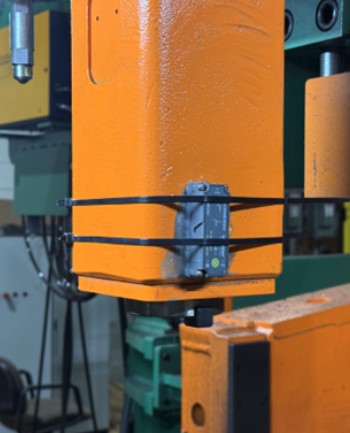
The project began with on-site vibration testing at Peddinghaus’ manufacturing facility. Tri-axial accelerometers were mounted near the spindle bearings, and both unloaded (free-spinning) and loaded (cutting) operational tests were conducted across the full speed range.

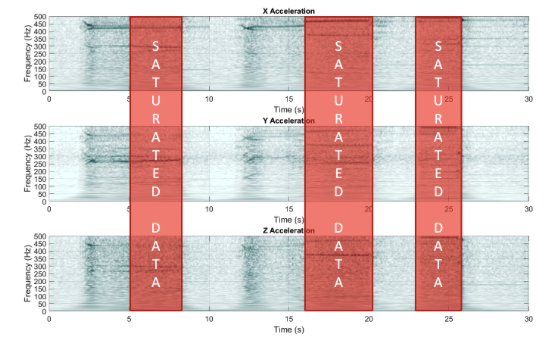
Spectral and wavelet analysis revealed a dominant vibration mode near 307 Hz, consistently excited during operation—particularly under asymmetric cutting with long, slender tooling. This frequency aligned with excitation from multi-flute cutting dynamics.

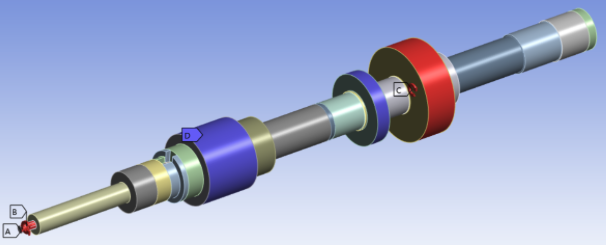
To identify the root cause, we developed a validated finite-element spindle model in ANSYS Mechanical. The simulation accurately reproduced the experimentally observed mode shape, revealing excessive radial deflection at the motor-end of the spindle. Multiple design concepts were evaluated numerically, including material changes, structural bracing, and bearing reconfiguration.

Outcome

The most effective solution was a floating bearing stack modification: adding an additional bearing and repositioning the stack closer to the drive belt. This change altered the spindle boundary conditions, significantly increasing system stiffness.

Simulation results showed the first modal frequency shifting from 307 Hz to 383 Hz, a 24.8% increase, moving the dominant mode safely outside the excitation range of the cutting process. The solution satisfies all sponsor constraints, requires minimal maintenance, and avoids changes to tooling or operating procedures.

The proposed modification is low-cost, mechanically simple, and directly informed by validated experimental and computational analysis—making it a practical, industry-ready solution.